
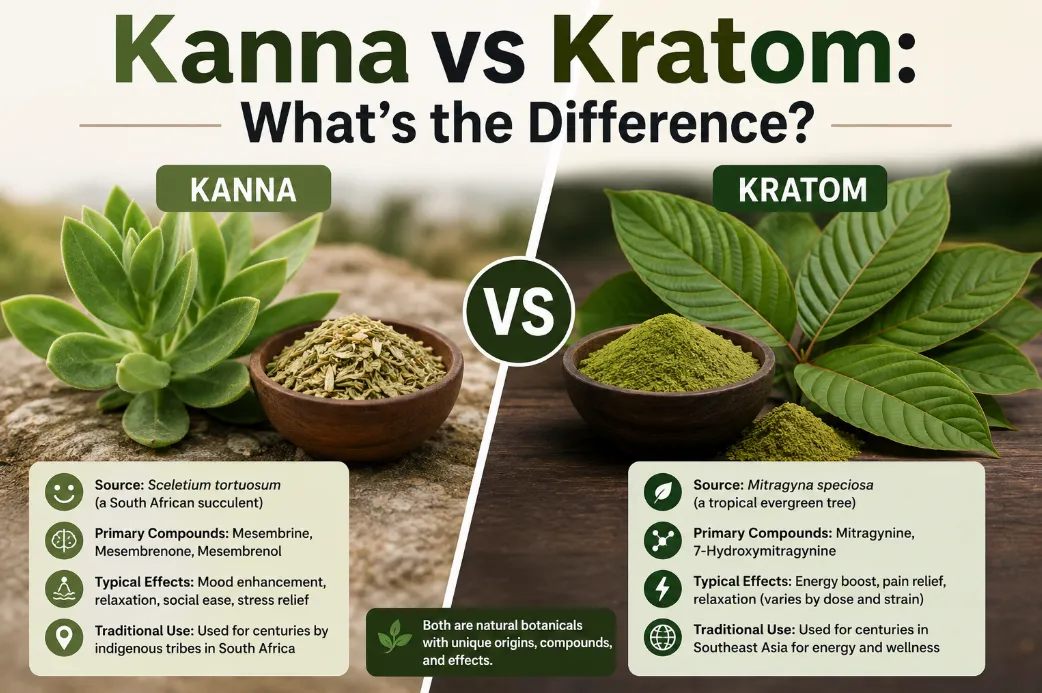
As interest in botanical wellness products continues to grow, two plant-based supplements frequently appear in conversations among consumers: Kanna and Kratom. While both are derived from plants and have histories of traditional use, they are very different in terms of origin, active compounds, traditional applications, and how they interact with the body.
Because the names are sometimes mentioned together, many people assume Kanna and Kratom are similar. In reality, they come from entirely different plants and possess distinct chemical profiles.
Today, consumers can find Kanna products from wellness-focused brands such as MyZen Organix, while Kratom products are sold through separate markets and are subject to varying regulations depending on location.
In this guide, we’ll compare Kanna vs Kratom, explain their differences, discuss their active compounds, and help you better understand these two popular botanicals.
What Is Kanna?
Kanna (Sceletium tortuosum) is a succulent plant native to South Africa.
For centuries, indigenous Khoikhoi and San communities traditionally used Kanna for purposes related to emotional well-being, social interaction, and resilience during challenging conditions.
Today, Kanna is commonly available in:
-
Gummies
-
Capsules
-
Extracts
-
Powders
-
Tinctures
The plant contains naturally occurring alkaloids that have attracted scientific interest due to their interaction with serotonin-related pathways and other neurological systems.
Key Active Compounds in Kanna
Some of the most studied alkaloids include:
-
Mesembrine
-
Mesembrenone
-
Mesembrenol
-
Tortuosamine
These compounds are largely responsible for Kanna’s unique profile.
What Is Kratom?
Kratom (Mitragyna speciosa) is a tropical tree native to Southeast Asia.
Traditionally, Kratom leaves have been used in countries such as:
-
Thailand
-
Indonesia
-
Malaysia
-
Myanmar
The leaves contain naturally occurring alkaloids that interact with receptors in the body differently than Kanna’s compounds.
Kratom is commonly available in:
-
Powders
-
Capsules
-
Extracts
-
Teas
Because of its unique alkaloid content, Kratom has become a topic of significant scientific, regulatory, and consumer interest.
Key Active Compounds in Kratom
The two most discussed alkaloids are:
-
Mitragynine
-
7-Hydroxymitragynine
These compounds contribute to Kratom’s distinct biological activity.
Kanna vs Kratom: Quick Comparison
|
Feature |
Kanna |
Kratom |
|
Scientific Name |
Sceletium tortuosum |
Mitragyna speciosa |
|
Native Region |
South Africa |
Southeast Asia |
|
Plant Type |
Succulent |
Tropical Tree |
|
Main Active Compounds |
Mesembrine Alkaloids |
Mitragynine Alkaloids |
|
Traditional Use |
Emotional Well-Being & Social Use |
Labor and Traditional Herbal Use |
|
Common Forms |
Gummies, Capsules, Extracts |
Powders, Capsules, Teas |
|
Modern Wellness Popularity |
Growing |
Established but Controversial |
Botanical Origins
One of the biggest differences between Kanna and Kratom is their origin.
Kanna
Kanna grows naturally in South Africa’s dry and semi-arid regions.
The plant has adapted to harsh environmental conditions and has been used by indigenous communities for generations.
Kratom
Kratom grows in the tropical climates of Southeast Asia.
Its leaves have been traditionally harvested and used by local populations for centuries.
Because they come from entirely different environments and plant families, Kanna and Kratom possess very different chemical compositions.
Active Compounds: Kanna vs Kratom
Kanna Alkaloids
Kanna contains alkaloids such as:
-
Mesembrine
-
Mesembrenone
-
Mesembrenol
Researchers have focused on these compounds because of their potential interactions with serotonin-related pathways.
Kratom Alkaloids
Kratom contains:
-
Mitragynine
-
7-Hydroxymitragynine
These compounds interact with different receptor systems than those associated with Kanna.
As a result, the two plants have fundamentally different mechanisms of action.
Traditional Uses of Kanna
Historically, Kanna was often:
-
Chewed
-
Fermented
-
Brewed into teas
-
Used during social gatherings
Traditional communities valued Kanna for its cultural significance and role in promoting emotional well-being.
Kanna also played a part in:
-
Community interactions
-
Ceremonial activities
-
Long-distance travel
Its traditional use remains an important part of its modern identity.
Traditional Uses of Kratom
In Southeast Asia, Kratom leaves were traditionally used by:
-
Farmers
-
Laborers
-
Rural communities
The leaves were often chewed or brewed into tea.
Kratom’s traditional role differed significantly from Kanna’s social and ceremonial uses.
This distinction reflects the different cultural contexts in which these plants evolved.
Modern Wellness Applications
Kanna Products
Modern Kanna products often emphasize:
-
Botanical wellness
-
Mood support
-
Relaxation
-
Emotional well-being
Common formats include:
-
Gummies
-
Capsules
-
Extracts
Kratom Products
Kratom products are typically sold as:
-
Powders
-
Capsules
-
Teas
-
Extracts
The consumer market for Kratom differs substantially from the modern Kanna wellness market.
Legal Status: Kanna vs Kratom
Kanna
Kanna is generally legal in many regions and is commonly sold as a botanical supplement.
Kratom
Kratom regulations vary significantly depending on:
-
Country
-
State
-
Local jurisdiction
Some regions permit Kratom sales, while others have restrictions or bans.
Consumers should always verify local laws before purchasing either product.
Safety Considerations
Kanna
Current research suggests Kanna has a generally favorable safety profile when used responsibly, although more studies are needed.
Consumers should:
-
Follow serving recommendations
-
Consult healthcare professionals when appropriate
Kratom
Kratom has been the subject of increased regulatory attention and ongoing scientific evaluation.
Because regulations and research continue to evolve, consumers should remain informed and consult qualified professionals before use.
Which One Is More Popular?
Popularity depends on the market being considered.
Kanna
Growing rapidly within:
-
Wellness communities
-
Botanical supplement markets
-
Natural lifestyle sectors
Kratom
Maintains a larger global user base but also faces greater regulatory scrutiny.
As awareness of Kanna increases, its popularity continues to expand.
Choosing High-Quality Botanical Products
Whether considering Kanna or any other botanical supplement, consumers should prioritize:
Transparent Labeling
Products should clearly disclose:
-
Ingredients
-
Serving sizes
-
Extract information
Third-Party Testing
Independent testing helps verify quality and purity.
Reputable Brands
Choose manufacturers committed to quality control and transparency.
Frequently Asked Questions
Is Kanna the Same as Kratom?
No. Kanna and Kratom are entirely different plants with different active compounds, traditional uses, and biological profiles.
Where Does Kanna Come From?
Kanna is native to South Africa.
Where Does Kratom Come From?
Kratom originates from Southeast Asia.
Do Kanna and Kratom Contain the Same Compounds?
No. Kanna contains mesembrine-related alkaloids, while Kratom contains mitragynine-related alkaloids.
Which Plant Has a Longer Traditional History?
Both plants have long histories of traditional use within their respective cultures and regions.
Final Thoughts
While Kanna and Kratom are often discussed together, they are fundamentally different botanicals. Kanna is a South African succulent traditionally associated with emotional well-being and social use, while Kratom is a Southeast Asian tree with a distinct cultural history and alkaloid profile.
Understanding these differences is essential for consumers interested in botanical wellness products. By learning about their origins, active compounds, traditional applications, and modern uses, individuals can make more informed decisions when exploring natural plant-based supplements.
As research continues and consumer awareness grows, both Kanna and Kratom will likely remain important topics within the broader conversation surrounding botanical wellness and traditional plant knowledge.
